After searching the internet for a while looking for articles on what other people thought of how the latin american people are represented in chicano cinema I came across the ideas of using books. I thought this would be a good idea as it would be an allready formated collection of data that has been put into one place. The only problem will be that I may need to distinquish between what is fact and fiction as otherwise I could end up quoting what the author opinion.
The book I have bought is called: Contemporary Latin American Cinema: Breaking into the Global Market. Writen by Deborah Shaw it will alow me to look into what others have said about how the Latin American community is represented in chicano industry from the year 2000. This is important because as you know this is the from where my project starts from. It will be interesting to see what she makes of The Motorcycle Diaries and of City of God.
Monday, 26 October 2009

Tuesday, 20 October 2009
Internet Movie Database
I have also joined IMDB today so that I can start up a thread on the internet and hopfully get some interesting reviews back from other members. It will be interesting to see how the public react to the forum. Here is the link to my thread.
http://www.imdb.com/board/bd0000034/thread/149835767
I have also posted a similar message on the City of God page.
http://uk.imdb.com/title/tt0317248/board/post/tt0317248
http://www.imdb.com/board/bd0000034/thread/149835767
I have also posted a similar message on the City of God page.
http://uk.imdb.com/title/tt0317248/board/post/tt0317248
Latest News
Today I have been busy on a website called survey monkey which helps to create qustionaires. I plan to send these via e-mail to certain people to hopfully get an insight in to what other people feel about how Latin American people are represented in the movies. For anyone who reads this post here too is the libk to the questionaire.
http://www.surveymonkey.com/s.aspx?sm=ovAE_2fDvudCtLi4Jmc_2fegIA_3d_3d
http://www.surveymonkey.com/s.aspx?sm=ovAE_2fDvudCtLi4Jmc_2fegIA_3d_3d
Friday, 16 October 2009
Common Ground
What is also important is what the three films have in common. All three could be labled as chicano new wave films but for diffrent reasons. As I learnt from reading a post on "The Noodle", a blog set up for Welling Media and Film I discoverd many traits which can belong to chicano new wave cinema.
All three films appear to have a very low budget.
Apear to be anti Hollywood (Hetrogenous) in construction (i.e, documentry and Non-Linear narrative etc)and also distribution. Motorcycle Diaries being distributed by film 4.
Motorcycle Diaries and City of God both have moderate sex references, appears to be a theme in most latin american films, except Bus 174 due to it being more of a documentry piece.
All three are based on true events and display a difference in social class.
All three films appear to have a very low budget.
Apear to be anti Hollywood (Hetrogenous) in construction (i.e, documentry and Non-Linear narrative etc)and also distribution. Motorcycle Diaries being distributed by film 4.
Motorcycle Diaries and City of God both have moderate sex references, appears to be a theme in most latin american films, except Bus 174 due to it being more of a documentry piece.
All three are based on true events and display a difference in social class.
Scenes in Bus 174
Scene 3 I think is an important part of Bus 174 as it shows what life is like from the side of being a street kid. It would be interesting to see what other Brazilians make of this view and waether they take it seriously.
Scene 1 (The opening of Bus 174) could be usful as it could be used to show parts of Rio and the Favela.
Scene 4 Time Code 00:32:25 I think may also be good as it involves an interview with a street kid who knew Sandro, he talks about how they did drugs together.
IDEA**** Possible chance to get some audience partcipation (Ask sombody what would they do if they were homeless?)End Time Code :00:34:14
Scene 1 (The opening of Bus 174) could be usful as it could be used to show parts of Rio and the Favela.
Scene 4 Time Code 00:32:25 I think may also be good as it involves an interview with a street kid who knew Sandro, he talks about how they did drugs together.
IDEA**** Possible chance to get some audience partcipation (Ask sombody what would they do if they were homeless?)End Time Code :00:34:14
Friday, 9 October 2009
Bus 174. How does it relate to the people of Brazil ?
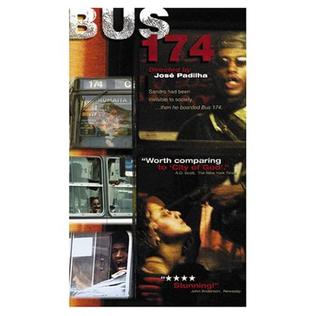
Bus 174 is an interesting film to choose when looking at a society because it's a documentry. It definatly showed a side of Rio which I previously hadn't thought of; the police.
I never really thought of the police in Rio as being harsh, I just assumed that they were dealing with difficult people and so were themselves acting tough. However after watching Bus 174 which not only shows real footage of the hostage situation on the bus but includes interviews from homeless gang members, police and hostages which were involved in the situation, did I realise that the police in a sense are worse than the criminals. At the beggining of the film a voiceover explains that th police consist of people who are unable to get a job, are poorly armed and educated and simply want to kill or arest anybody who has done somthing remotly wrong.
The special sqaud are trained well but are still restricted by lack of radios and so in a sense still struggle to uphold what they do despite thier better weapons and professionalism.
Part of the film which I think shocked me the most was when they showed the conditions of a prison in Rio, ten people were expected to share a space ment for four with no natural light in temperatures of 50 degrees celcius. Beateings also appear to be a major part of prison life which I think explains why so many reofenders do such extreame things not to go back into the cities jail service.
I never really thought of the police in Rio as being harsh, I just assumed that they were dealing with difficult people and so were themselves acting tough. However after watching Bus 174 which not only shows real footage of the hostage situation on the bus but includes interviews from homeless gang members, police and hostages which were involved in the situation, did I realise that the police in a sense are worse than the criminals. At the beggining of the film a voiceover explains that th police consist of people who are unable to get a job, are poorly armed and educated and simply want to kill or arest anybody who has done somthing remotly wrong.
The special sqaud are trained well but are still restricted by lack of radios and so in a sense still struggle to uphold what they do despite thier better weapons and professionalism.
Part of the film which I think shocked me the most was when they showed the conditions of a prison in Rio, ten people were expected to share a space ment for four with no natural light in temperatures of 50 degrees celcius. Beateings also appear to be a major part of prison life which I think explains why so many reofenders do such extreame things not to go back into the cities jail service.
Here is a video I have found, skip to 3:00 mins to watch the part about the jail.
Thursday, 8 October 2009
Great News
Great News. My third focus film has finally arrived from play.com, wish it could have come slightly earlyier but atleast now I am able to carry on with my plans. Darn postal strike.
Tuesday, 6 October 2009
A Little Rushed
I wasn't expecting to have something to report the day after I posted the previous message, especially something as important as an interview with somebody who has experienced the streets of the Favella (slums) first hand. Anyway despite my lack of preparation I did manage to interview Anissa Ladjemi on Brazilian cinema. Here's how it went.
Q - Does the film City of God represent the life in the Favella accurately?
A - In some ways it does and in some ways it doesn't because the majority of people in the Favella are just poor. The majority are not drug dealers. The problem is that the drug dealers have a lot of ownership around the Favella. So often, say if the electricity went out and someone might have to go over to someone in that environment and pay them to get their electricity back. So in a way poor people have to kind of in a sense respect the groups of people to get things done but it doesn't mean they actually want to its just the way it works.
The majority of people are poor because there is not a social system, there is no help from the government, there is no social security, there is none of that. So in some ways it is, where we were the drugs dealers at the top of the Favella and often you are not allowed beyond a certain point. So there is very much lots and lots of rules and you have to respect the rules of the Favella. If someone tells you not to go somewhere you don't do it, if someone tells you this is dangerous, you don't do it and if something does go wrong then you have to make sure you tell the right person so that it can be sorted out. So there are a lot of rules. So in some ways, I did hear the occasional gun shot, its not like it is on screen on those days people just don't leave their houses. It's not constant the City of God was at a time when Rio was basically at war with each other so City of God was when it was really a war zone between the police and the people living there. It's not as extreme now but it still goes on but not constantly like in the film. That was a moment in time.
Q - Was the City of God well received in Brazil?
A - Yes and no, people thought that it was fantastic that somebody had risen up out of the Favella and become successful but I think they were more worried about the damage it would do nationally because Brazilians who do not live in that community don't want to be judged by the people who do live in that community. They don't want people to think that everyone is a drug dealer, carries a gun or that every policeman is corrupt. So in some ways it was good because that is the reality of that community but it does not represent Brazil as a whole.
Q - The film was criticised, do you think this was a fair criticism?
A - Well, the City of God was based on true events, it's the truth, it's just that sometimes people do not want to hear the truth. It was criticised because it showed so much violence on screen, so I think that was why it was criticised.
Q - Is there a danger that the West only sees Brazil through the eyes of the Director, Meirelles?
A - There is a risk of that. Unfortunately Brazil is a country that is plagues by stereotypes. There is also this idea that the people in the Favella are lazy and don't work but that is not the case. Most people in the Favella work 15 hours a day and barely have enough money for a bowl of rice. The reason why there is so many problems with the drugs and the violence is because that is the way of earning money quickly. Working a 15 hour day for a bowl of rice you are not going to have many savings, you are not realistically going to be able to feed everyone so that's why people go into that because it's quick money, it's all about the money really.
Q- Are there any other films that you could recomend that represent the life of the Brazilian or Latin American people ?
A- Elite Squad is a recent film about corrupt poilice in Rio.
Centeral Station is also a good film, it won many golden globes and was a posertive film in Brazil as people felt it represented the real Brazil rather than just the hard life of the favella.
Q - Does the film City of God represent the life in the Favella accurately?
A - In some ways it does and in some ways it doesn't because the majority of people in the Favella are just poor. The majority are not drug dealers. The problem is that the drug dealers have a lot of ownership around the Favella. So often, say if the electricity went out and someone might have to go over to someone in that environment and pay them to get their electricity back. So in a way poor people have to kind of in a sense respect the groups of people to get things done but it doesn't mean they actually want to its just the way it works.
The majority of people are poor because there is not a social system, there is no help from the government, there is no social security, there is none of that. So in some ways it is, where we were the drugs dealers at the top of the Favella and often you are not allowed beyond a certain point. So there is very much lots and lots of rules and you have to respect the rules of the Favella. If someone tells you not to go somewhere you don't do it, if someone tells you this is dangerous, you don't do it and if something does go wrong then you have to make sure you tell the right person so that it can be sorted out. So there are a lot of rules. So in some ways, I did hear the occasional gun shot, its not like it is on screen on those days people just don't leave their houses. It's not constant the City of God was at a time when Rio was basically at war with each other so City of God was when it was really a war zone between the police and the people living there. It's not as extreme now but it still goes on but not constantly like in the film. That was a moment in time.
Q - Was the City of God well received in Brazil?
A - Yes and no, people thought that it was fantastic that somebody had risen up out of the Favella and become successful but I think they were more worried about the damage it would do nationally because Brazilians who do not live in that community don't want to be judged by the people who do live in that community. They don't want people to think that everyone is a drug dealer, carries a gun or that every policeman is corrupt. So in some ways it was good because that is the reality of that community but it does not represent Brazil as a whole.
Q - The film was criticised, do you think this was a fair criticism?
A - Well, the City of God was based on true events, it's the truth, it's just that sometimes people do not want to hear the truth. It was criticised because it showed so much violence on screen, so I think that was why it was criticised.
Q - Is there a danger that the West only sees Brazil through the eyes of the Director, Meirelles?
A - There is a risk of that. Unfortunately Brazil is a country that is plagues by stereotypes. There is also this idea that the people in the Favella are lazy and don't work but that is not the case. Most people in the Favella work 15 hours a day and barely have enough money for a bowl of rice. The reason why there is so many problems with the drugs and the violence is because that is the way of earning money quickly. Working a 15 hour day for a bowl of rice you are not going to have many savings, you are not realistically going to be able to feed everyone so that's why people go into that because it's quick money, it's all about the money really.
Q- Are there any other films that you could recomend that represent the life of the Brazilian or Latin American people ?
A- Elite Squad is a recent film about corrupt poilice in Rio.
Centeral Station is also a good film, it won many golden globes and was a posertive film in Brazil as people felt it represented the real Brazil rather than just the hard life of the favella.
Monday, 5 October 2009
Getting Busy
After strugerling to get into the research side of the project I do now believe that I could be getting somewhere, I have orderd Bus 174 off of the internet after spending a while chasing peoplre for copies and hope that this can stand as my third focus film. Especially as I have an interview comming up with a gap year co-ordinator who spends large amounts of time in Brazil.
I will update you again once I have something else to report.
I will update you again once I have something else to report.
Subscribe to:
Posts (Atom)