Catalogue
Films
Motorcycle Diaries: (2004. Dir. Walter Salles) Good film which shows the people of Latin America equally from all the countries. The interviews in black and white were particularly interesting as they weren’t staged and show some of the trouble that the people were in.
Bus 174: (2004. Dir. José Padilha, Felipe Lacerda) Excellent resource depicting the true events of the bus 174 high jacking in Rio de Jeniro in Brazil. Made from a collection of interviews and live TV footage it is interesting to think that this was broadcast live creating a hug amount of publicity for the people in the Favella.
City of God: (2003. Dir. Fernando Meirelles). A good resource and a great film that many people have seen, depicts a time of great unrest in the Brazilian Favella. A great representation of the desperation of the people and the will to make something of themselves.
Interviews
Anissa Ladjemi: Is part of a gap year service in Brazil working particularly with the children in the Favella. What she had to say about the Favella and how it linked to City of God is invaluable.
DVD extra with Alberto Granado: Depicts the people they met on their original journey and the troubles they faced, very useful to compare to the film, The Motorcycle Diaries.
Questionnaires
Survey Monkey: The questionnaires that I sent out got some really good responses from a large amount of people that are not only great film critics but have also visited some of the countries depicted in the films.
Books / Magazines
Contempory Latin American Cinema: (Book) by Deborah Shaw (Published by Rowan & Littlefield Publishers Inc. Not much of a great read but defiantly a useful resource. The essays in this book were second to none.
Sight and Sound: (Magazine) Article on the film Bus 174. Great resources as there were no questionnaires completed on that particular film. So this article makes up for the lack of text.
Deselected
I have decided not to include the film "CHE" as I felt that it focused too much on the single person rather than the people he was with etc.
I have also decided not to include the biography, " Guevara, also known as Che" as that too I felt also focused on the individual rather than the people as a whole.
Lastly I have also deselected infomation I discoverd at the BFI libery as I don't think that much of it is releavent to my topic.
Tuesday, 15 December 2009

Monday, 14 December 2009
BFI The Libary
Hello guys, as you know I went to the BFI libary last Thursday which was deffinatly a great place to go if you need research and a place that I will definatly visit again if I ever need to do some reasearch in the future. Unfortunatly I didn't find much that was of use to me as I think that I may have been looking through the wrong books and research which were provided when I arived. Despite this I did manage to find a little which I can use in my presentation alongside all the infomation I had allready.
Friday, 4 December 2009
The Catalogue List
Hi guys. The time has come for me to fianlly start to plan my presentation so I am starting my catalogue.
Things that I wish to include:
Things that I wish to include:
- Interview with Anissa Ladjemi on City of God and Brazil.
- Contempory Latin American Cinema book by Deborah Shaw ( Published by Rowan & Littlefield Publishers Inc
- Article from Sight and Sound magazine, Bus 174
- Questionaires from Survey Monkey
- E-mail interview ( Yet to Happen)
- DvD extra from Motorcycle Diaries
- Film, Motorcycle Diaries
- Film, Bus 174
- Film, City of God
Wednesday, 2 December 2009
The Questions
Here I have the list of questions that I promised you. I am going to ask Mr O'Conor and his wife these at the interview.
1. I understand tht you are from Brazil, may I ask where abouts in realtion to Rio de Jeniro.
2. Have you ever seen the films Bus 174, City of God or Motorcycle Diaries.
3. Do you know if the films were well recieved in Brazil, and Motorcycle Diaries in terms of Latin America?
4 City of God has been critsised for glamourising and selling poverty. Is this a fair critique?
5 Obeveously if you have seen the Bus 174 film then you know of the incident but were you in Brazil at the time and did you see/ hear anything about it on the television or radio.
6. During the incident one woman phoned her work just to say she was going to be late, the equivilent of leaves on the line. Is this sort of thing common in Rio, or Brazil as a whole?
7. (MD CLIP) Do you think that films such as these display Brazil/Latin America in a good light. It would appear that through the eyes of the directors that Latin America is having its national identity striped away?
8. Lastly are there any films that show Brazil in another way than the films I have allready mentioned display the country/continent, if so were they well recieved in the west in the same way to the other thre films.
1. I understand tht you are from Brazil, may I ask where abouts in realtion to Rio de Jeniro.
2. Have you ever seen the films Bus 174, City of God or Motorcycle Diaries.
3. Do you know if the films were well recieved in Brazil, and Motorcycle Diaries in terms of Latin America?
4 City of God has been critsised for glamourising and selling poverty. Is this a fair critique?
5 Obeveously if you have seen the Bus 174 film then you know of the incident but were you in Brazil at the time and did you see/ hear anything about it on the television or radio.
6. During the incident one woman phoned her work just to say she was going to be late, the equivilent of leaves on the line. Is this sort of thing common in Rio, or Brazil as a whole?
7. (MD CLIP) Do you think that films such as these display Brazil/Latin America in a good light. It would appear that through the eyes of the directors that Latin America is having its national identity striped away?
8. Lastly are there any films that show Brazil in another way than the films I have allready mentioned display the country/continent, if so were they well recieved in the west in the same way to the other thre films.
Tuesday, 1 December 2009
Another Interview
As the title suggests I may have another interview in the pipeline, this time with Mr O'Conor and his wife who is origanaly from Brazil. He was supoosed to have e-maild me over the weekend but unfortunatly for some reason it didnt come through. I will need to see him on Friday as that is when he is in next.
Thursday, 26 November 2009
British Film Institute
Great news followers of Chicano Cinema, the school has finnaly managed to work together and arrange a trip to the BFI. This is great from my POV as they get infomation ready for you for when you get there and also allow you to look stuff up yourself while your there. This I'm hoping is gonna be research heaven :D
Also tomorrow s Friday which is when Mr O'Connor is in school so hopfully I can track him down and pin a date on an interview with him and his wife, fingers crossed. I'll report back to you soon so that you know wheather I found him or not :)
Also tomorrow s Friday which is when Mr O'Connor is in school so hopfully I can track him down and pin a date on an interview with him and his wife, fingers crossed. I'll report back to you soon so that you know wheather I found him or not :)
Friday, 20 November 2009
The Reading
Goood morning folks. Just to keep you posted on what is happening in the world, yesterday all the film classes came together and poured through various resources including magazines, books and also portfolios and projects to find more qoutes and infomation on our topics. I unfortunatly didn't find a huge amount but was able to find a review looking into the film Bus 174. This is especially great new because out of all my research it is the one people and myself know little about. Ofcouse I understand the story from the way that the director wanted it to be portrayed but it would be nice to see what other people thought of the situation.
Tuesday, 10 November 2009
Reading the Book
I am reding into the book that I bought which contains infomation around Latin American contemporary cinema, so much so as you ofcourse allready know the book is called Contempory Latin American Cinema. It has alot of interesting points but one that I hadn't really thought about previously was marketing. I never thought about how a film could have one trailer for its homeland and one for neighbouring and far away contries, but this ofcourse is the case. The Boat that Rocked is a good example of this as the film was ofcourse British, but had a seperate trailer to entice the Americans across the Atlantic. This means that what a local or even national audience see in a film could be almost a completely different to what an international viewer could see in the same movie. Motorcycle Diaries, my focus film could be interpreted in three different ways. Firstly it could be seen as a simple road movie, it could be seen as a way of documenting the early years of Ernesto "Che" Guevaras life, or thirdly it could be seen as a way of documenting the suffering of the Latin Americans. All thre are a correct way of viewing the film but depending where you come from or what you are interested in is what you see in the film.
One particular part of the book which I found really interesting was when the director of the Motorcycle Diaries was mentioned. Origernally a documentry maker from Brazil Walter Salles is cosiderd the father of brazilian cinema and that is no exaduration. After the 84 day trip which Salles and the crew recreated Salles said " As well as being a Brazilian filmaker, he now knew that he was a that he was Latin Amererican filmaker." It appears to be that in his films Salles cant help but try to represent the people he depicts like in the film "Central do Brasil he includes" footage of real people. Much like what appears in the Motorcycle Diaries when Ernestio and Alberto interview people in the cities they enter. You can tell these scenes are different by the use of black and white. What is strange however is how Salles appears to be in a sense an auteur, hos production company helpes Latin American people and films which ofcourse is a good thing but does mean that he appears to have a say in every film that leaves the country. Making it appear as if instead of having many views thaere is simply a representation of Wlter Salles Latin America.
One particular part of the book which I found really interesting was when the director of the Motorcycle Diaries was mentioned. Origernally a documentry maker from Brazil Walter Salles is cosiderd the father of brazilian cinema and that is no exaduration. After the 84 day trip which Salles and the crew recreated Salles said " As well as being a Brazilian filmaker, he now knew that he was a that he was Latin Amererican filmaker." It appears to be that in his films Salles cant help but try to represent the people he depicts like in the film "Central do Brasil he includes" footage of real people. Much like what appears in the Motorcycle Diaries when Ernestio and Alberto interview people in the cities they enter. You can tell these scenes are different by the use of black and white. What is strange however is how Salles appears to be in a sense an auteur, hos production company helpes Latin American people and films which ofcourse is a good thing but does mean that he appears to have a say in every film that leaves the country. Making it appear as if instead of having many views thaere is simply a representation of Wlter Salles Latin America.
Tuesday, 3 November 2009
IMDB + Survey Monkey Update
Great news. Discoverd today a message from sombody who has given me the names of two other films to look at Elite Sqaud and Carandiru, I plan to also watch these films and see how they compare to what I have seen in the other three films.
Survey Monkey has suddenley taken off, I pasted a link which attched the questionaire to an email and then sent it to everybody I know on Facebook. I have had some random awnsers but the majorityso far have been informative and helpfull which is really good news. Lets hope it continues.
Survey Monkey has suddenley taken off, I pasted a link which attched the questionaire to an email and then sent it to everybody I know on Facebook. I have had some random awnsers but the majorityso far have been informative and helpfull which is really good news. Lets hope it continues.
Monday, 26 October 2009
Books
After searching the internet for a while looking for articles on what other people thought of how the latin american people are represented in chicano cinema I came across the ideas of using books. I thought this would be a good idea as it would be an allready formated collection of data that has been put into one place. The only problem will be that I may need to distinquish between what is fact and fiction as otherwise I could end up quoting what the author opinion.
The book I have bought is called: Contemporary Latin American Cinema: Breaking into the Global Market. Writen by Deborah Shaw it will alow me to look into what others have said about how the Latin American community is represented in chicano industry from the year 2000. This is important because as you know this is the from where my project starts from. It will be interesting to see what she makes of The Motorcycle Diaries and of City of God.
The book I have bought is called: Contemporary Latin American Cinema: Breaking into the Global Market. Writen by Deborah Shaw it will alow me to look into what others have said about how the Latin American community is represented in chicano industry from the year 2000. This is important because as you know this is the from where my project starts from. It will be interesting to see what she makes of The Motorcycle Diaries and of City of God.
Tuesday, 20 October 2009
Internet Movie Database
I have also joined IMDB today so that I can start up a thread on the internet and hopfully get some interesting reviews back from other members. It will be interesting to see how the public react to the forum. Here is the link to my thread.
http://www.imdb.com/board/bd0000034/thread/149835767
I have also posted a similar message on the City of God page.
http://uk.imdb.com/title/tt0317248/board/post/tt0317248
http://www.imdb.com/board/bd0000034/thread/149835767
I have also posted a similar message on the City of God page.
http://uk.imdb.com/title/tt0317248/board/post/tt0317248
Latest News
Today I have been busy on a website called survey monkey which helps to create qustionaires. I plan to send these via e-mail to certain people to hopfully get an insight in to what other people feel about how Latin American people are represented in the movies. For anyone who reads this post here too is the libk to the questionaire.
http://www.surveymonkey.com/s.aspx?sm=ovAE_2fDvudCtLi4Jmc_2fegIA_3d_3d
http://www.surveymonkey.com/s.aspx?sm=ovAE_2fDvudCtLi4Jmc_2fegIA_3d_3d
Friday, 16 October 2009
Common Ground
What is also important is what the three films have in common. All three could be labled as chicano new wave films but for diffrent reasons. As I learnt from reading a post on "The Noodle", a blog set up for Welling Media and Film I discoverd many traits which can belong to chicano new wave cinema.
All three films appear to have a very low budget.
Apear to be anti Hollywood (Hetrogenous) in construction (i.e, documentry and Non-Linear narrative etc)and also distribution. Motorcycle Diaries being distributed by film 4.
Motorcycle Diaries and City of God both have moderate sex references, appears to be a theme in most latin american films, except Bus 174 due to it being more of a documentry piece.
All three are based on true events and display a difference in social class.
All three films appear to have a very low budget.
Apear to be anti Hollywood (Hetrogenous) in construction (i.e, documentry and Non-Linear narrative etc)and also distribution. Motorcycle Diaries being distributed by film 4.
Motorcycle Diaries and City of God both have moderate sex references, appears to be a theme in most latin american films, except Bus 174 due to it being more of a documentry piece.
All three are based on true events and display a difference in social class.
Scenes in Bus 174
Scene 3 I think is an important part of Bus 174 as it shows what life is like from the side of being a street kid. It would be interesting to see what other Brazilians make of this view and waether they take it seriously.
Scene 1 (The opening of Bus 174) could be usful as it could be used to show parts of Rio and the Favela.
Scene 4 Time Code 00:32:25 I think may also be good as it involves an interview with a street kid who knew Sandro, he talks about how they did drugs together.
IDEA**** Possible chance to get some audience partcipation (Ask sombody what would they do if they were homeless?)End Time Code :00:34:14
Scene 1 (The opening of Bus 174) could be usful as it could be used to show parts of Rio and the Favela.
Scene 4 Time Code 00:32:25 I think may also be good as it involves an interview with a street kid who knew Sandro, he talks about how they did drugs together.
IDEA**** Possible chance to get some audience partcipation (Ask sombody what would they do if they were homeless?)End Time Code :00:34:14
Friday, 9 October 2009
Bus 174. How does it relate to the people of Brazil ?
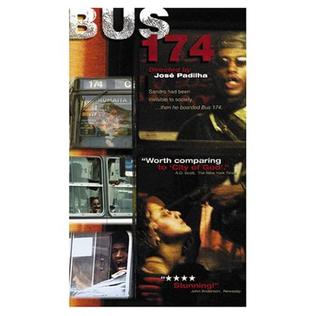
Bus 174 is an interesting film to choose when looking at a society because it's a documentry. It definatly showed a side of Rio which I previously hadn't thought of; the police.
I never really thought of the police in Rio as being harsh, I just assumed that they were dealing with difficult people and so were themselves acting tough. However after watching Bus 174 which not only shows real footage of the hostage situation on the bus but includes interviews from homeless gang members, police and hostages which were involved in the situation, did I realise that the police in a sense are worse than the criminals. At the beggining of the film a voiceover explains that th police consist of people who are unable to get a job, are poorly armed and educated and simply want to kill or arest anybody who has done somthing remotly wrong.
The special sqaud are trained well but are still restricted by lack of radios and so in a sense still struggle to uphold what they do despite thier better weapons and professionalism.
Part of the film which I think shocked me the most was when they showed the conditions of a prison in Rio, ten people were expected to share a space ment for four with no natural light in temperatures of 50 degrees celcius. Beateings also appear to be a major part of prison life which I think explains why so many reofenders do such extreame things not to go back into the cities jail service.
I never really thought of the police in Rio as being harsh, I just assumed that they were dealing with difficult people and so were themselves acting tough. However after watching Bus 174 which not only shows real footage of the hostage situation on the bus but includes interviews from homeless gang members, police and hostages which were involved in the situation, did I realise that the police in a sense are worse than the criminals. At the beggining of the film a voiceover explains that th police consist of people who are unable to get a job, are poorly armed and educated and simply want to kill or arest anybody who has done somthing remotly wrong.
The special sqaud are trained well but are still restricted by lack of radios and so in a sense still struggle to uphold what they do despite thier better weapons and professionalism.
Part of the film which I think shocked me the most was when they showed the conditions of a prison in Rio, ten people were expected to share a space ment for four with no natural light in temperatures of 50 degrees celcius. Beateings also appear to be a major part of prison life which I think explains why so many reofenders do such extreame things not to go back into the cities jail service.
Here is a video I have found, skip to 3:00 mins to watch the part about the jail.
Thursday, 8 October 2009
Great News
Great News. My third focus film has finally arrived from play.com, wish it could have come slightly earlyier but atleast now I am able to carry on with my plans. Darn postal strike.
Tuesday, 6 October 2009
A Little Rushed
I wasn't expecting to have something to report the day after I posted the previous message, especially something as important as an interview with somebody who has experienced the streets of the Favella (slums) first hand. Anyway despite my lack of preparation I did manage to interview Anissa Ladjemi on Brazilian cinema. Here's how it went.
Q - Does the film City of God represent the life in the Favella accurately?
A - In some ways it does and in some ways it doesn't because the majority of people in the Favella are just poor. The majority are not drug dealers. The problem is that the drug dealers have a lot of ownership around the Favella. So often, say if the electricity went out and someone might have to go over to someone in that environment and pay them to get their electricity back. So in a way poor people have to kind of in a sense respect the groups of people to get things done but it doesn't mean they actually want to its just the way it works.
The majority of people are poor because there is not a social system, there is no help from the government, there is no social security, there is none of that. So in some ways it is, where we were the drugs dealers at the top of the Favella and often you are not allowed beyond a certain point. So there is very much lots and lots of rules and you have to respect the rules of the Favella. If someone tells you not to go somewhere you don't do it, if someone tells you this is dangerous, you don't do it and if something does go wrong then you have to make sure you tell the right person so that it can be sorted out. So there are a lot of rules. So in some ways, I did hear the occasional gun shot, its not like it is on screen on those days people just don't leave their houses. It's not constant the City of God was at a time when Rio was basically at war with each other so City of God was when it was really a war zone between the police and the people living there. It's not as extreme now but it still goes on but not constantly like in the film. That was a moment in time.
Q - Was the City of God well received in Brazil?
A - Yes and no, people thought that it was fantastic that somebody had risen up out of the Favella and become successful but I think they were more worried about the damage it would do nationally because Brazilians who do not live in that community don't want to be judged by the people who do live in that community. They don't want people to think that everyone is a drug dealer, carries a gun or that every policeman is corrupt. So in some ways it was good because that is the reality of that community but it does not represent Brazil as a whole.
Q - The film was criticised, do you think this was a fair criticism?
A - Well, the City of God was based on true events, it's the truth, it's just that sometimes people do not want to hear the truth. It was criticised because it showed so much violence on screen, so I think that was why it was criticised.
Q - Is there a danger that the West only sees Brazil through the eyes of the Director, Meirelles?
A - There is a risk of that. Unfortunately Brazil is a country that is plagues by stereotypes. There is also this idea that the people in the Favella are lazy and don't work but that is not the case. Most people in the Favella work 15 hours a day and barely have enough money for a bowl of rice. The reason why there is so many problems with the drugs and the violence is because that is the way of earning money quickly. Working a 15 hour day for a bowl of rice you are not going to have many savings, you are not realistically going to be able to feed everyone so that's why people go into that because it's quick money, it's all about the money really.
Q- Are there any other films that you could recomend that represent the life of the Brazilian or Latin American people ?
A- Elite Squad is a recent film about corrupt poilice in Rio.
Centeral Station is also a good film, it won many golden globes and was a posertive film in Brazil as people felt it represented the real Brazil rather than just the hard life of the favella.
Q - Does the film City of God represent the life in the Favella accurately?
A - In some ways it does and in some ways it doesn't because the majority of people in the Favella are just poor. The majority are not drug dealers. The problem is that the drug dealers have a lot of ownership around the Favella. So often, say if the electricity went out and someone might have to go over to someone in that environment and pay them to get their electricity back. So in a way poor people have to kind of in a sense respect the groups of people to get things done but it doesn't mean they actually want to its just the way it works.
The majority of people are poor because there is not a social system, there is no help from the government, there is no social security, there is none of that. So in some ways it is, where we were the drugs dealers at the top of the Favella and often you are not allowed beyond a certain point. So there is very much lots and lots of rules and you have to respect the rules of the Favella. If someone tells you not to go somewhere you don't do it, if someone tells you this is dangerous, you don't do it and if something does go wrong then you have to make sure you tell the right person so that it can be sorted out. So there are a lot of rules. So in some ways, I did hear the occasional gun shot, its not like it is on screen on those days people just don't leave their houses. It's not constant the City of God was at a time when Rio was basically at war with each other so City of God was when it was really a war zone between the police and the people living there. It's not as extreme now but it still goes on but not constantly like in the film. That was a moment in time.
Q - Was the City of God well received in Brazil?
A - Yes and no, people thought that it was fantastic that somebody had risen up out of the Favella and become successful but I think they were more worried about the damage it would do nationally because Brazilians who do not live in that community don't want to be judged by the people who do live in that community. They don't want people to think that everyone is a drug dealer, carries a gun or that every policeman is corrupt. So in some ways it was good because that is the reality of that community but it does not represent Brazil as a whole.
Q - The film was criticised, do you think this was a fair criticism?
A - Well, the City of God was based on true events, it's the truth, it's just that sometimes people do not want to hear the truth. It was criticised because it showed so much violence on screen, so I think that was why it was criticised.
Q - Is there a danger that the West only sees Brazil through the eyes of the Director, Meirelles?
A - There is a risk of that. Unfortunately Brazil is a country that is plagues by stereotypes. There is also this idea that the people in the Favella are lazy and don't work but that is not the case. Most people in the Favella work 15 hours a day and barely have enough money for a bowl of rice. The reason why there is so many problems with the drugs and the violence is because that is the way of earning money quickly. Working a 15 hour day for a bowl of rice you are not going to have many savings, you are not realistically going to be able to feed everyone so that's why people go into that because it's quick money, it's all about the money really.
Q- Are there any other films that you could recomend that represent the life of the Brazilian or Latin American people ?
A- Elite Squad is a recent film about corrupt poilice in Rio.
Centeral Station is also a good film, it won many golden globes and was a posertive film in Brazil as people felt it represented the real Brazil rather than just the hard life of the favella.
Monday, 5 October 2009
Getting Busy
After strugerling to get into the research side of the project I do now believe that I could be getting somewhere, I have orderd Bus 174 off of the internet after spending a while chasing peoplre for copies and hope that this can stand as my third focus film. Especially as I have an interview comming up with a gap year co-ordinator who spends large amounts of time in Brazil.
I will update you again once I have something else to report.
I will update you again once I have something else to report.
Wednesday, 23 September 2009
A Decision
After much thought and discussion, plus watching CHE again I have decided that it prehaps isn't the best film to reflect the people of latin america as it tends to focus on the life of Che Guevara more than the latin american people which he is helping. This is understandable as it is a biographical film about Guevara but it doesn't help my reserch project much.
When asking my parents about what made them think of southern/ latin america the main ansewers were: Drugs, suffering/peasents and dancing. Prehaps however I need to head to a latin american community or speak to someone to find a good film which they beleive represents their community.
When asking my parents about what made them think of southern/ latin america the main ansewers were: Drugs, suffering/peasents and dancing. Prehaps however I need to head to a latin american community or speak to someone to find a good film which they beleive represents their community.
Tuesday, 22 September 2009
Key Scenes
I did find it rather difficult to choose these scenes but I think I might have finally got there, although I may need to go over them.
CHE:
I have chosen scene 9 because of how it demonstrates how latin american people wish to stand up to what is right as one big family.
Also I have chosen scene 6 as it shows how the latin american people wish to hold onto their spanish roots even after struggling under american imperialism.
City of God:
Scene 1 represents the life of many of the slums in which many latin american people live, dominated by crime and violence.
Scene 17 is a good example of somebody getting out of the slums.
Motorcycle Diaries:
Scene 7 (Hospitality) Demonstrates how pooer other countries through south america were also poverty stricken, not only Cuba.
Scene 9 (Coloney) Shows segregation between the sick and well.
CHE:
I have chosen scene 9 because of how it demonstrates how latin american people wish to stand up to what is right as one big family.
Also I have chosen scene 6 as it shows how the latin american people wish to hold onto their spanish roots even after struggling under american imperialism.
City of God:
Scene 1 represents the life of many of the slums in which many latin american people live, dominated by crime and violence.
Scene 17 is a good example of somebody getting out of the slums.
Motorcycle Diaries:
Scene 7 (Hospitality) Demonstrates how pooer other countries through south america were also poverty stricken, not only Cuba.
Scene 9 (Coloney) Shows segregation between the sick and well.
What is self reflection
Self reflection is where a person looks deep inside themselves and judges what they have done, what was good, what was bad. What did you do in the past which will effect your future.
Friday, 18 September 2009
More to reserch.
Surfing the interweb looking for more places to reserch I have discoverd a small study of Chicano Cinema on The Noodle :D
Heres the link:
http://6thformnoodle.blogspot.com/2009/06/city-of-god-and-chicano-cinema.html
Also I have found this Latin American Cine group in camden this could be usefull for opinions.
http://www.camden.gov.uk/ccm/content/contacts/non-council-contacts/community-and-living/contact-latin-american-association.en
http://laha.wordpress.com/
Heres the link:
http://6thformnoodle.blogspot.com/2009/06/city-of-god-and-chicano-cinema.html
Also I have found this Latin American Cine group in camden this could be usefull for opinions.
http://www.camden.gov.uk/ccm/content/contacts/non-council-contacts/community-and-living/contact-latin-american-association.en
http://laha.wordpress.com/
Getting There
Great news, my third and final film that I need to study has arrived in the post at last so now I can knuckle down and star some proper reserch. Also I need to get in contact with Mr O'Connor allthough he doesnt appear to be in the school at the moment.
Wednesday, 16 September 2009
Main Question Broken Down (What to Reserch)
What kind of representations could be said to be self reflective ?
Which of the films represent these certain representations -------> Key Scenes
Defining Chicano Cinema (Convention and style)
How can I accesess the impact of these perceptions on national identity? ----->
Which of the films represent these certain representations -------> Key Scenes
Defining Chicano Cinema (Convention and style)
How can I accesess the impact of these perceptions on national identity? ----->
- Critical Writings (BFI?)
- Reviews of films
- Audience feedback, questions/interviews
- Internet Reserch
How do latin americans see themselves? Is this refected in the films. Audience opinion of latin america from films (Audience Perception)
Places to Reserch
Google Books - Great research tool as has many books published onto the Internet.
- Include Shot in America: Television, the state and the rise of Chicano cinema (Chon A Noriega)
- Latin American Cinema
Other Books - Chicano Cinema: Research, Reviews Recorces (Gary D Keller)
- Contemporary Latin American Cinema ( Deborah Shaw)
Other Sources
The Noodle - Has lots of information on the City of God
Speak to Mr O'Connor to interview about Latin American cinema
Set up a focus group to see what other people feel is reflected in the films.
Post questions on the Internet, IMDB
- Include Shot in America: Television, the state and the rise of Chicano cinema (Chon A Noriega)
- Latin American Cinema
Other Books - Chicano Cinema: Research, Reviews Recorces (Gary D Keller)
- Contemporary Latin American Cinema ( Deborah Shaw)
Other Sources
The Noodle - Has lots of information on the City of God
Speak to Mr O'Connor to interview about Latin American cinema
Set up a focus group to see what other people feel is reflected in the films.
Post questions on the Internet, IMDB
Saturday, 12 September 2009
Focus Films
My main focus film I have chosen is The Motorcycle Diaries directed by Walter Salles, due mainly to the fact that the film allows the viewer to witness what Latin America was like from outsiders point of view it leaves the many countries open to interpretation, although perhaps a slightly biased one as the lead character is Esterno "Che" Guevara.
My second film is simply titled Che. I know little about this film but as it revolves around Che Guevara who I have discovered, after reading his biography had more to do with South America than just the Cuban revolution, i'm sure the film being released will provide some interesting reactions from the Cuban and Latin American people.
My third and final film is a very well known Brazilian film, The City of God. Again this film created some interesting reactions in Brazil when released as it depicted the harsh reality of life in the slums of Rio De Janiero
My second film is simply titled Che. I know little about this film but as it revolves around Che Guevara who I have discovered, after reading his biography had more to do with South America than just the Cuban revolution, i'm sure the film being released will provide some interesting reactions from the Cuban and Latin American people.
My third and final film is a very well known Brazilian film, The City of God. Again this film created some interesting reactions in Brazil when released as it depicted the harsh reality of life in the slums of Rio De Janiero
Welcome to Chicano New Wave :D
On this blog I shall post everything I have found for my small scale reserch project.
My focus being:
A close analytical study of Chicano (Latin American) cinema between 2000 & 2009; it's self reflective representations and the impact of these perceptions on national identity.
My focus being:
A close analytical study of Chicano (Latin American) cinema between 2000 & 2009; it's self reflective representations and the impact of these perceptions on national identity.
Subscribe to:
Posts (Atom)